

User Workshop as Part of Requirements Planning
Fachbeitrag für das Kompetenzzentrum Bauen der Hochschulen NRW (KOBA) von LOGO IC zum Thema “Nutzerworkshop in der Bedarfsplanung” anhand des Beispiels FH Dortmund.
1. Why Requirements Planning – and why a workshop?
Before a building can be designed, it must first be clarified what is actually going to take place within it: who will use it, how people will work and learn, and what spaces are required for these activities.
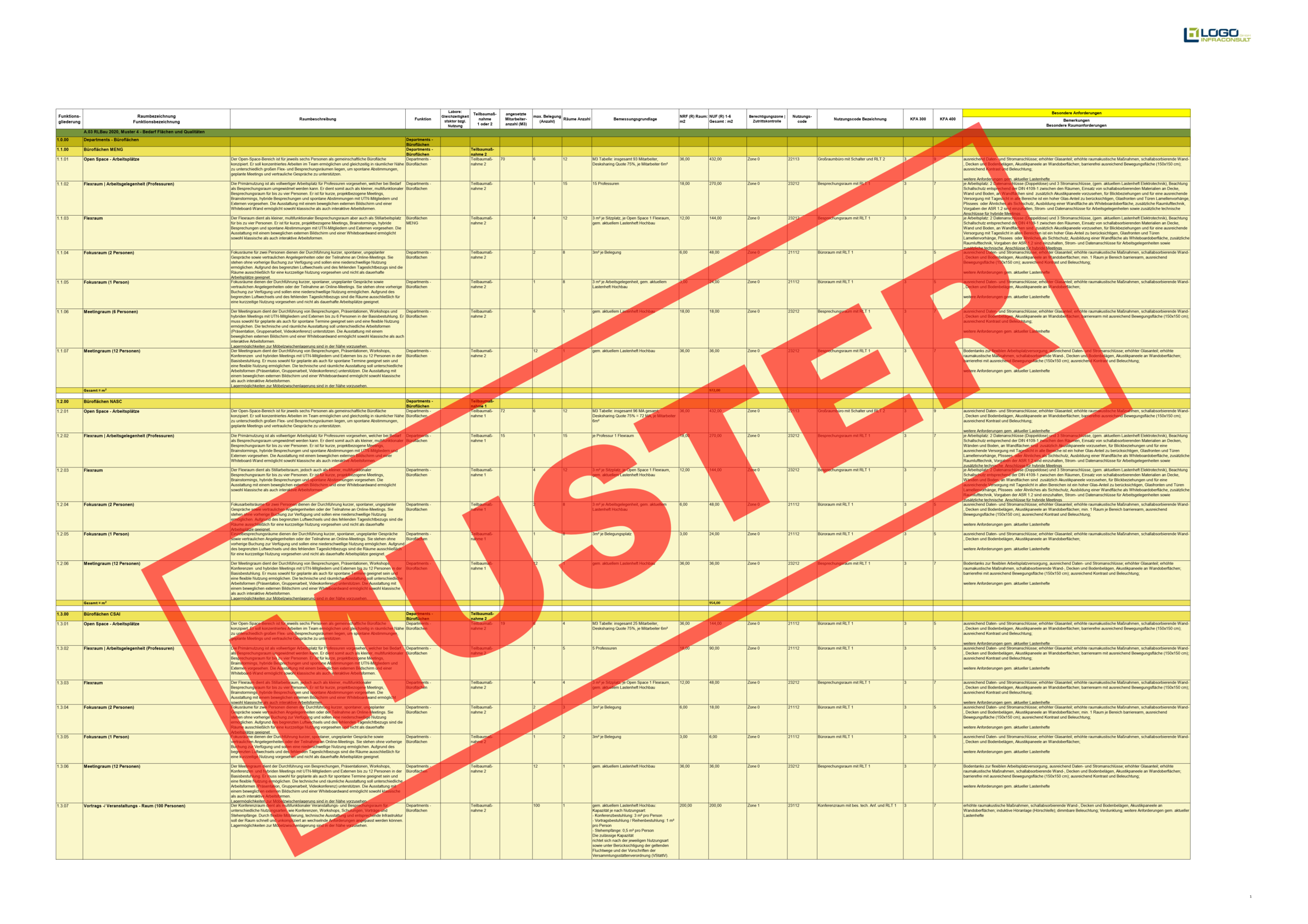
Requirements planning is not only a substantive basis for the project but also a formal precondition. The identified space requirements must be reviewed and approved by the responsible ministry. A building can only be designed, constructed or converted on the basis of an approved Requirements planning.
But why use a workshop rather than simply conducting a survey or an expert interview? Because needs rarely exist in isolation; they emerge through the interaction of different perspectives. A workshop brings all relevant stakeholders together. It is intended to build broad consensus, incorporate all relevant perspectives and make use of the collective knowledge of everyone involved – what is often referred to as collective intelligence. Individual interviews or questionnaires alone cannot achieve this.
This is where LOGO InfraConsult GmbH comes in. To clarify topics such as New Work, New Learning, digitalisation and flexible space utilisation – which are often not yet fully defined – we involve users of educational and research facilities in the requirements planning process at an early stage and in a structured manner. In doing so, we draw on DIN 18205, the relevant standard for requirements planning in construction, as well as our extensive project experience.
2. From questionnaire to workshop
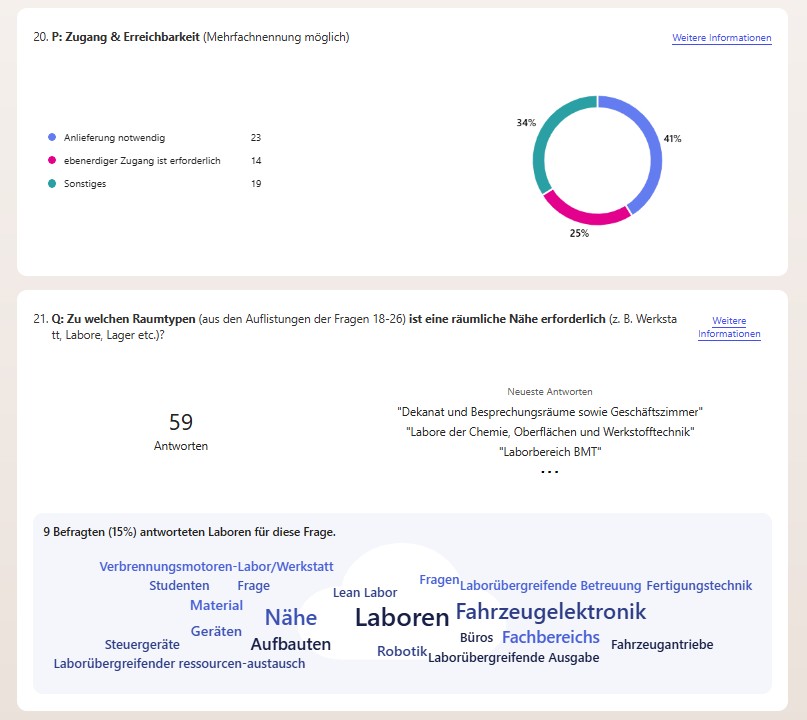
Before each workshop, we send digital questionnaires to the participating user groups. These provide initial information on the organisation, working methods and spatial requirements. The purpose is not only to collect information, but also to identify interrelationships, open issues and areas requiring clarification.
We document our understanding of the respective organisational unit, including its structure, working methods and spatial requirements. At the same time, we formulate specific questions to be explored in greater depth during the user workshop.
These questions form the substantive focus of the workshop and ensure that the time available for joint work is used effectively – with a clear agenda, a coordinated selection of participants and appropriate facilitation methods.
3. Creating space for free thinking
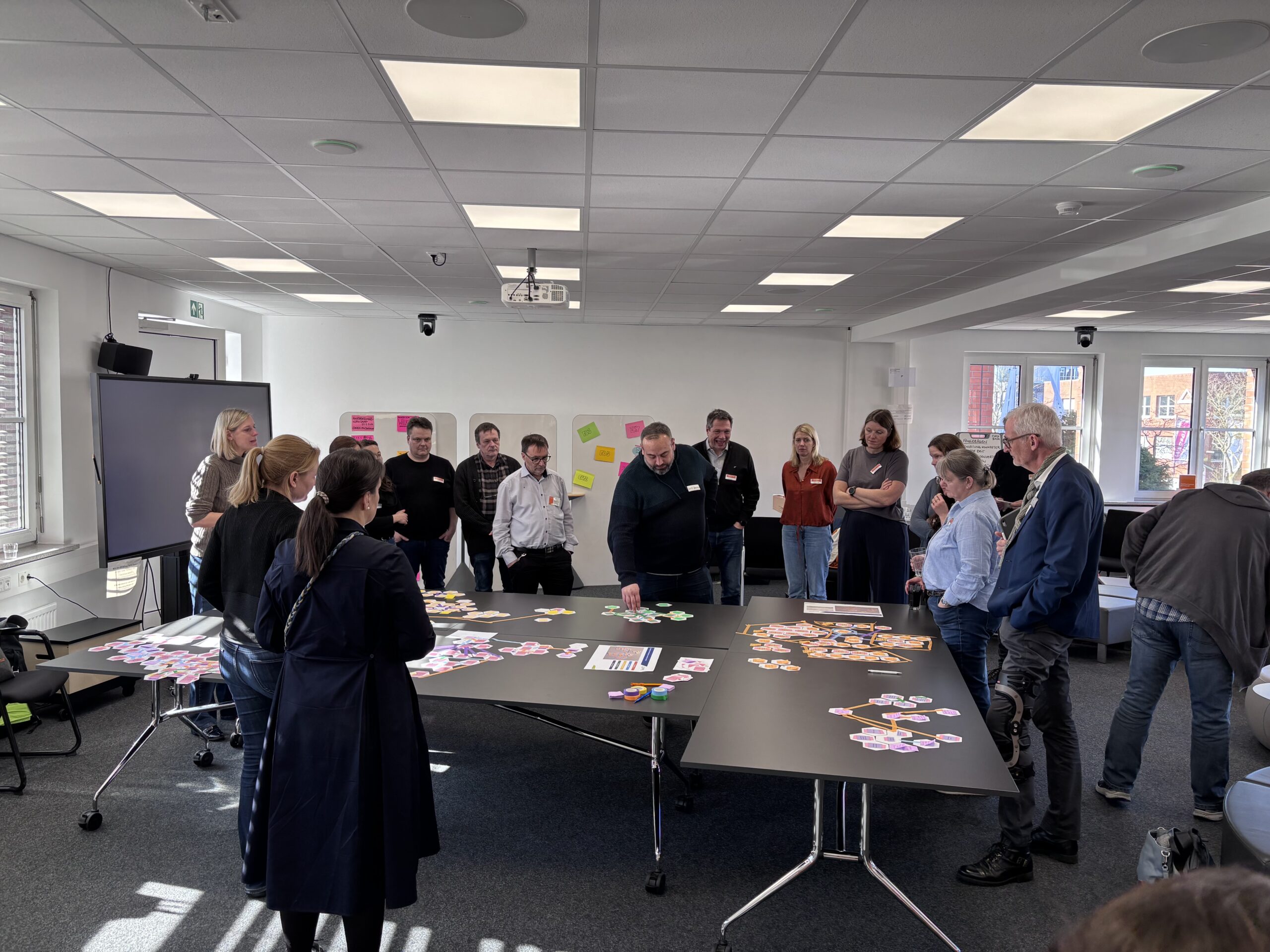
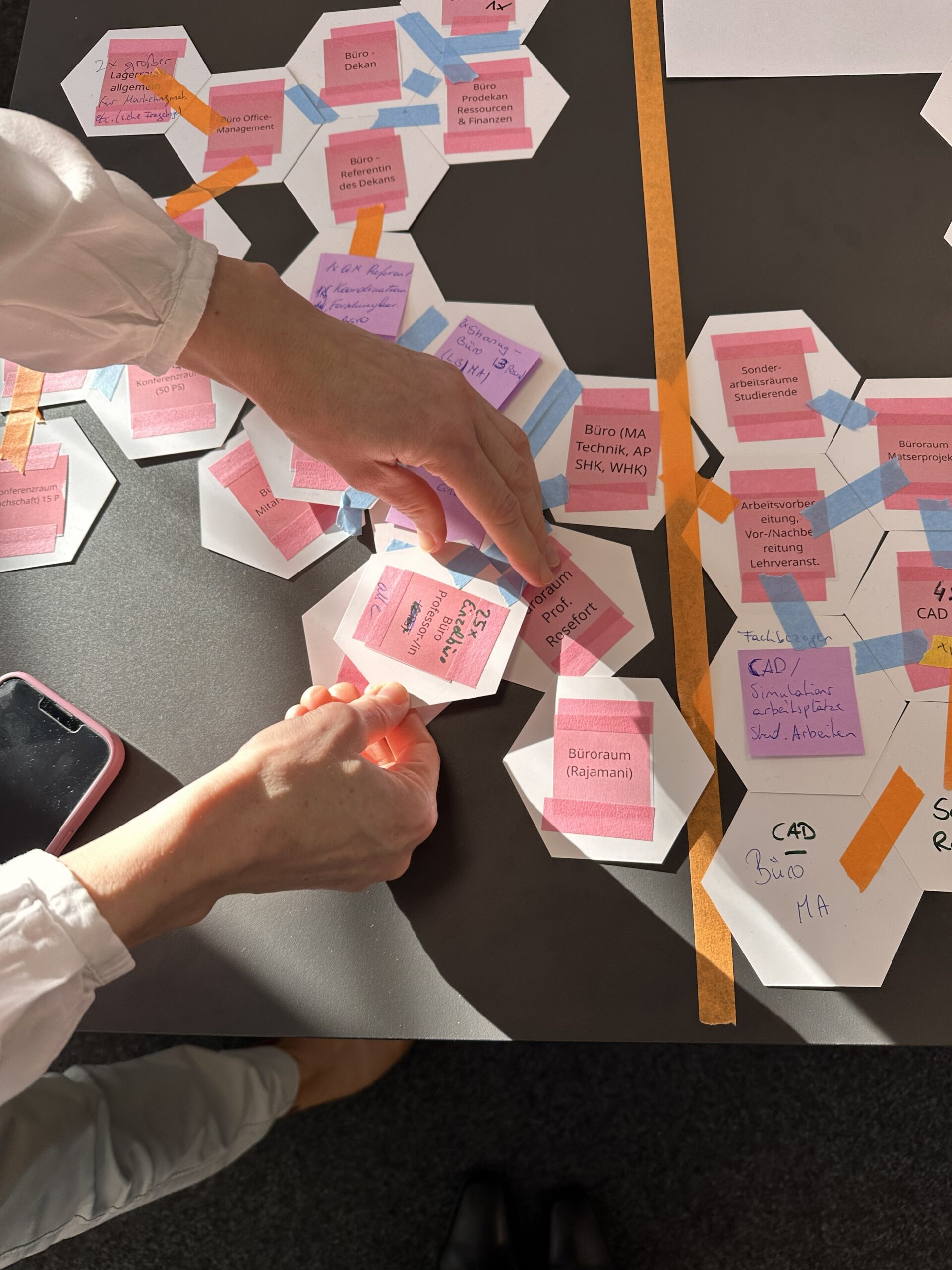
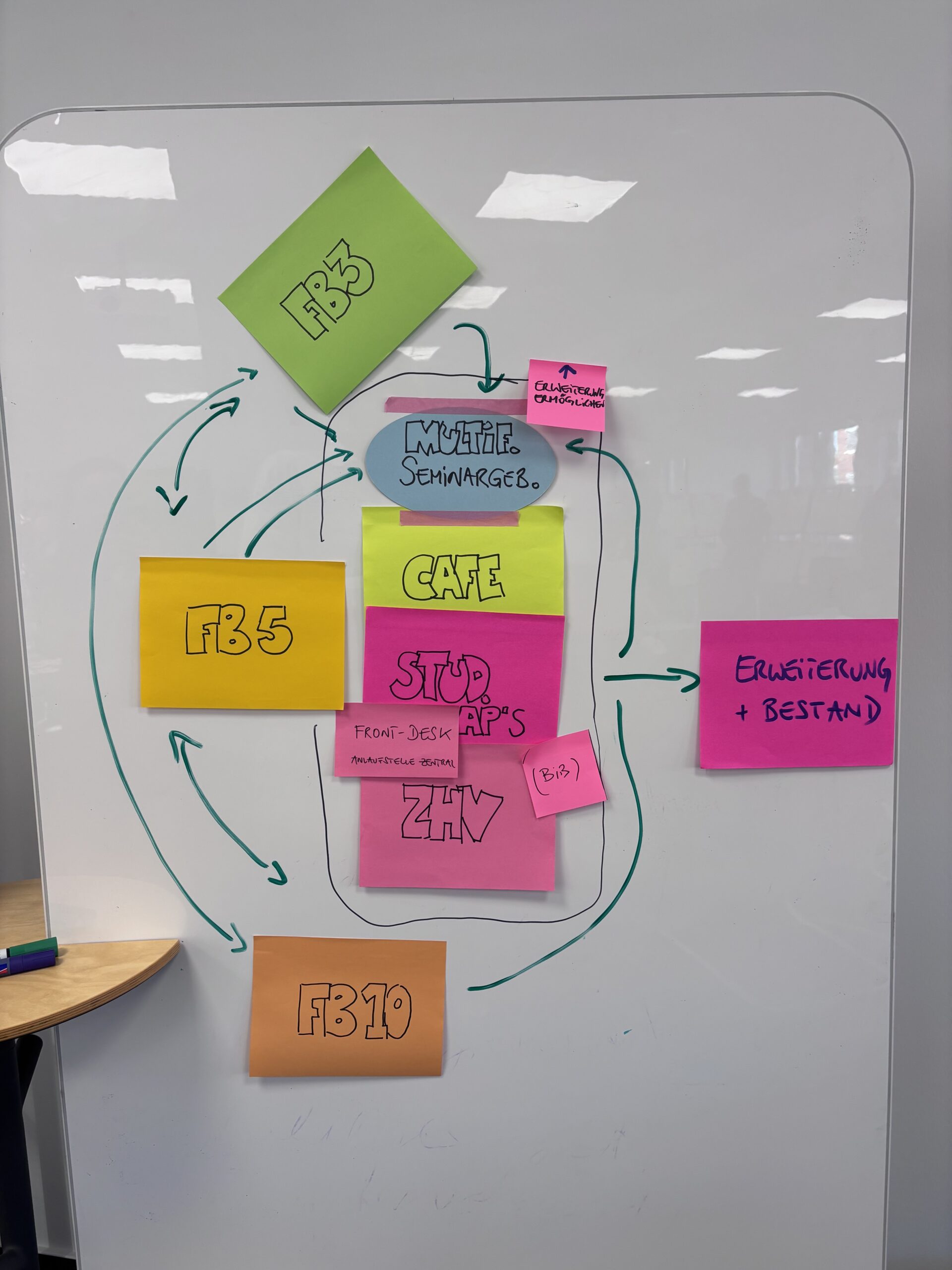
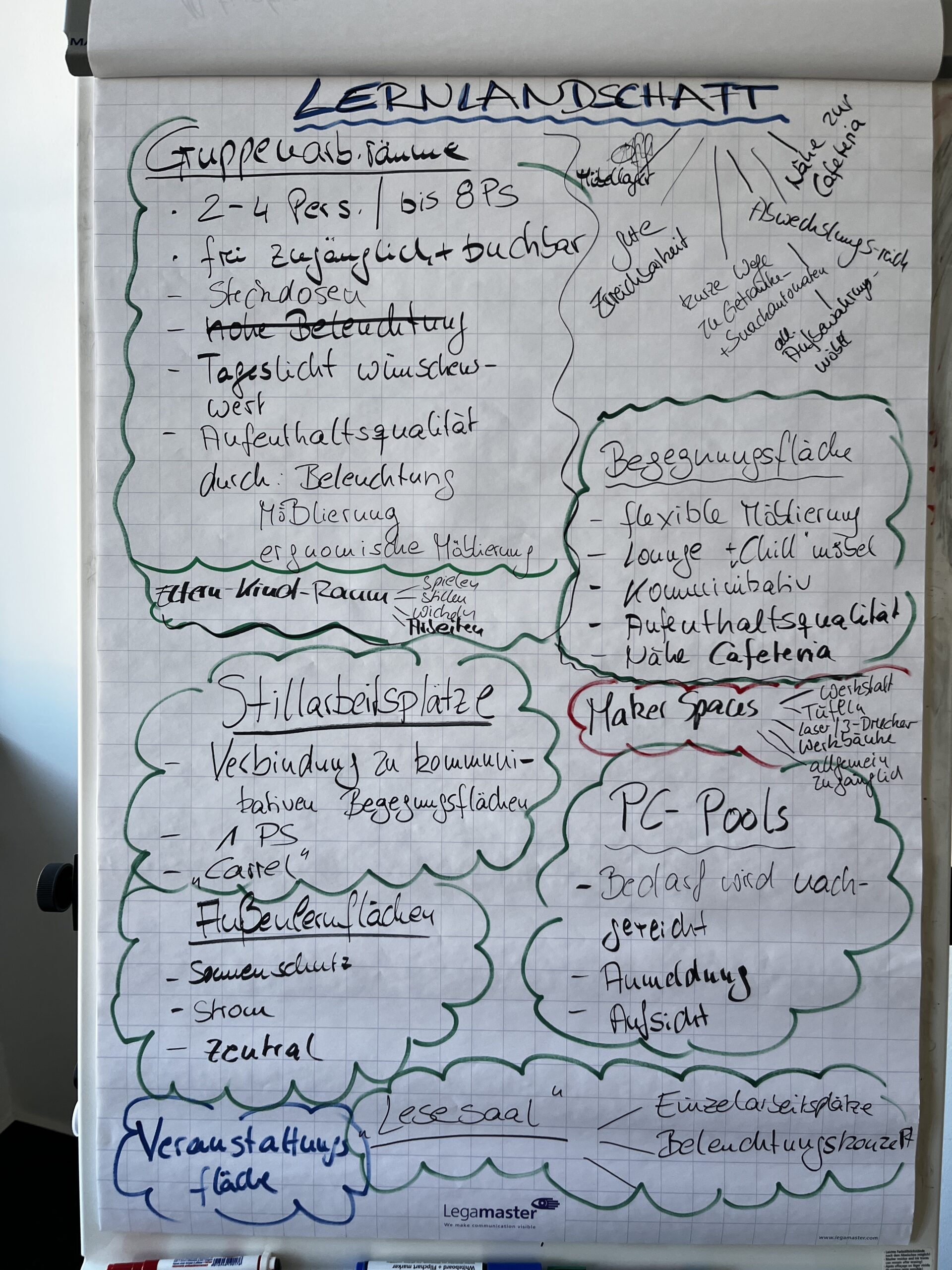
During the workshop, we deliberately create a creative setting that encourages open and unconstrained thinking. By alternating between individual and group work as well as plenary discussions, we make both the specific requirements of individual departments and overarching synergies and interdependencies visible.
We regularly see user groups realise through joint discussion that they have similar space requirements – and that these spaces could be shared in the future. What was initially described as a separate requirement becomes a shared resource. Space can be saved, reallocated or used more efficiently.
Insights like these do not emerge at a desk – they emerge through dialogue.
4. Typical challenges and how we address them
User workshops regularly reveal similar challenges. Strategic questions about the future – for example, regarding teaching and working models, digitalisation, location strategies or overarching synergies between departments – have often not yet been fully clarified within the organisation.
Such topics can be identified during the workshop, but they cannot always be decided there. We record them and jointly clarify with the client how they should be addressed. This often leads to additional workshops or targeted coordination meetings.
Unclear expectations can also make the process more difficult. User workshops are not intended to collect wish lists; they are designed to identify, prioritise and substantiate robust requirements.
The composition of the participant group is equally important. Missing perspectives, groups that are too large or unclear roles can negatively affect the discussion. Other typical challenges include incomplete questionnaires, contradictory information, the dominance of individual participants or a lack of decision-making authority.
Careful preparation, a clearly defined decision-making framework – such as a maximum permitted floor area – precise questions and transparent documentation are therefore essential. Open issues are not ignored; they are documented and referred to a targeted clarification process.