

User-Centred Requirements Planning: The Foundation of Every Successful Refurbishment
Refurbishing existing buildings does not begin with demolition. It begins with an understanding of how a building operates and of the people who run and use it.
Particularly in the case of complex properties, an early and comprehensive assessment determines whether a refurbishment becomes a viable, future-proof solution.
Refurbishing existing buildings is more than a construction task.
Refurbishing a building without understanding its operations is like performing surgery without a diagnosis.
On large-scale projects, success depends on establishing a shared understanding and on close collaboration among all stakeholders. Only then can different perspectives and considerations be brought together, requirements be viewed holistically, and refurbishment solutions be developed that are functional, economically sound and fit for the future.
Requirements change!
New ways of working, digital technologies, regulatory requirements and additional user groups have a direct impact on spaces, processes and technical systems. If these changes are not taken into account at an early stage, the result can be inefficient workflows, additional costs and extensive rework.
That is why refurbishing existing buildings requires more than a technical survey.
It requires:
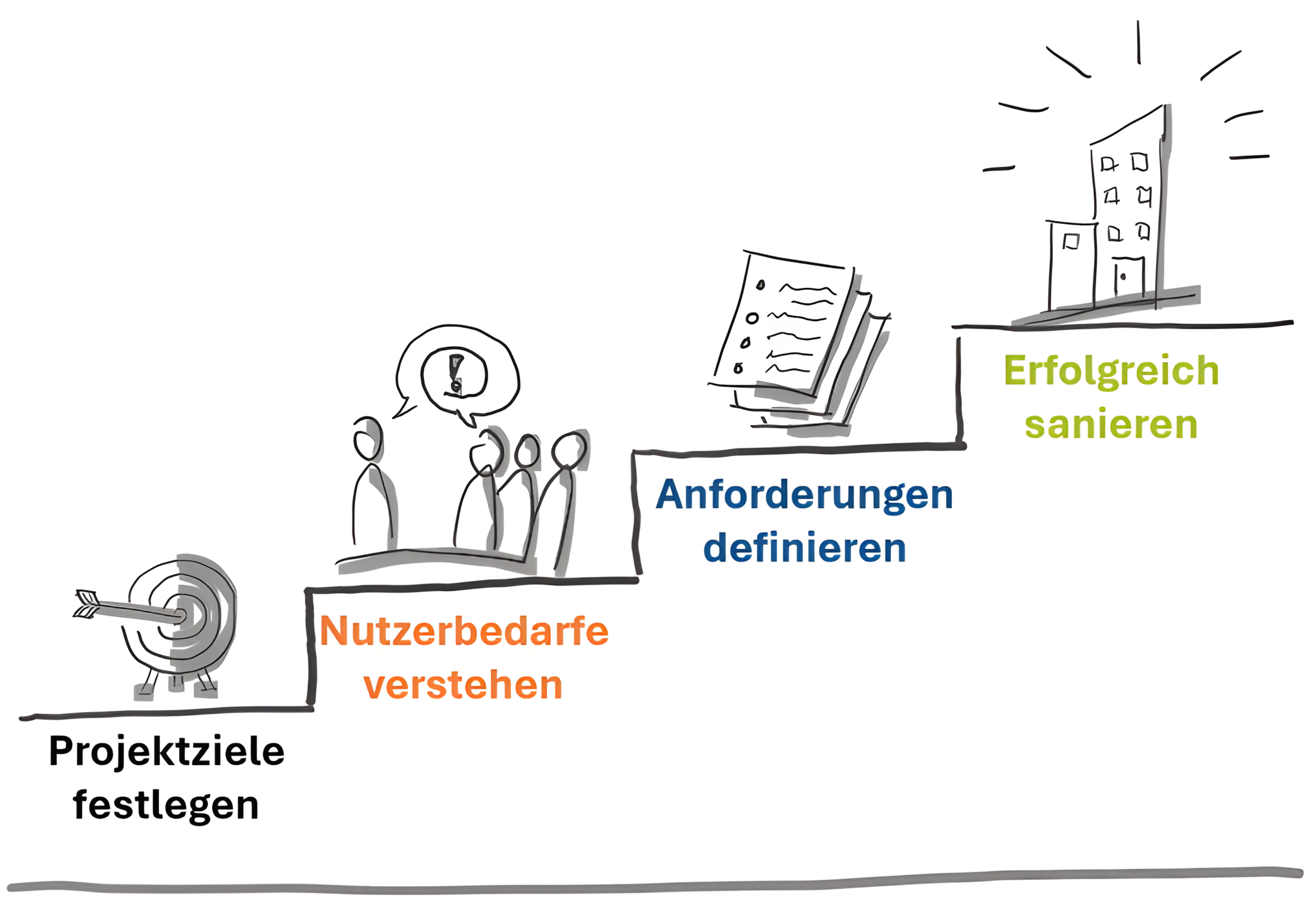
- a structured dialogue with users
- clear and traceable requirements
- continuous change management
- a single, shared information base for all stakeholders
- solutions that leave room for future developments
In our chapter “Nutzerfokus als Basis für Bestandssanierung” (User Focus as the Basis for Refurbishing Existing Buildings), we show why a focus on users is an essential prerequisite for functional, economically sound and future-proof refurbishment solutions.
After all, refurbishing existing buildings succeeds where construction, operations and users are considered together.
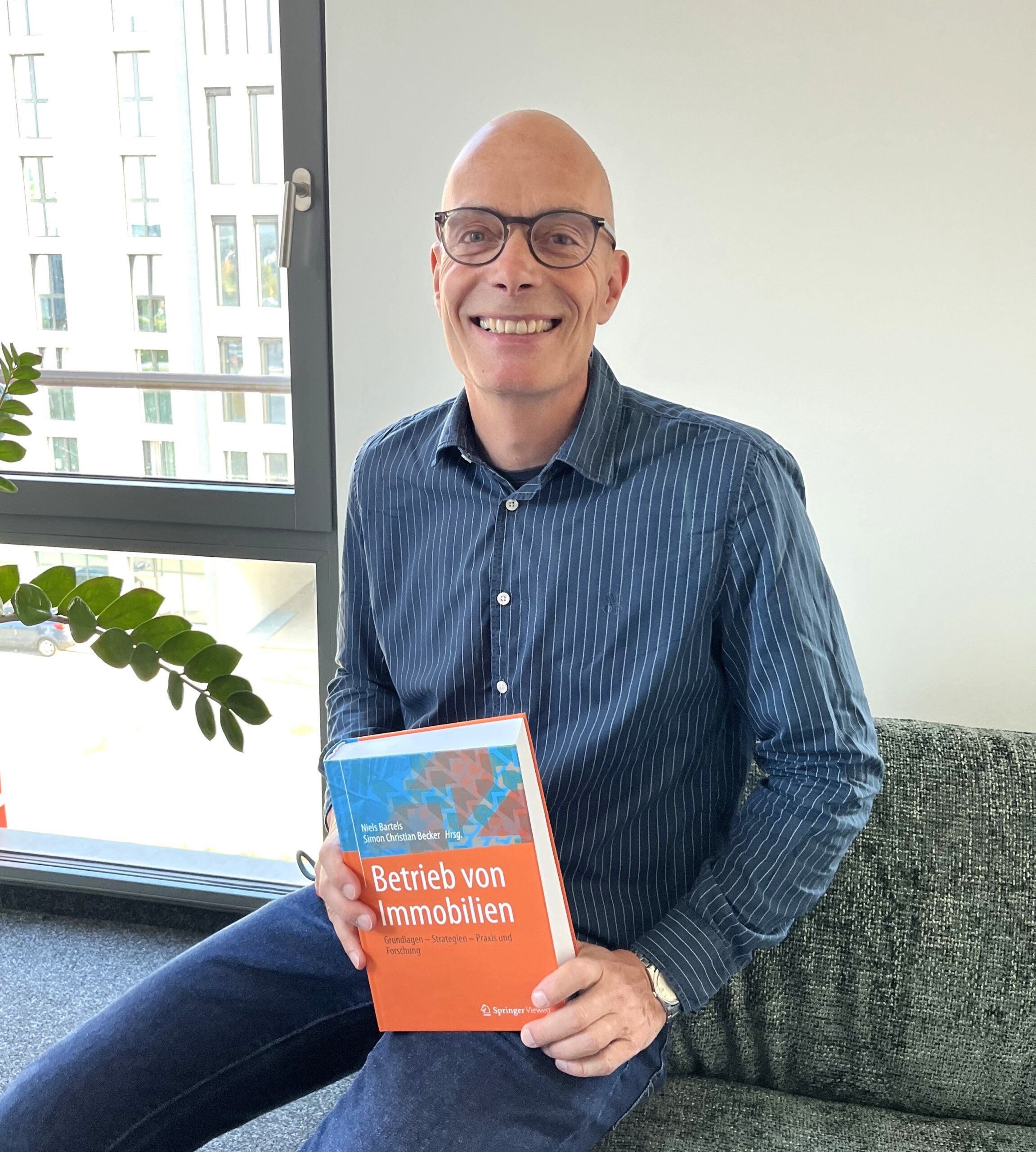
The chapter is part of the book “Betrieb von Immobilien” (Real Estate Operations), published by Springer Vieweg, and is also available individually as an online version.